Cornwall might have started Britain’s surf story, but Scotland is fast becoming its next great chapter. Across the northern coastline – from Thurso to Tiree – small, independent surf schools are making waves by delivering lessons every bit as good as those offered by the established surf schools in Newquay.
Forget crowded beaches and conveyor-belt sessions. In Scotland, it’s all about smaller classes, local knowledge, and the kind of personal touch that turns first-time visitors into lifelong surfers.
Learning from Cornwall’s Best
Down south, locals have long known that it’s not the big-name surf schools that deliver the best experience – it’s the smaller, family-run schools that focus on connection and quality. Scotland’s independent surf scene is taking inspiration from that model, blending world-class instruction with the authenticity and warmth of local hospitality.
“Cornwall showed us that surfing doesn’t have to be commercial,” says Fraser Gillies, coach at North Shore Surf School in Caithness. “We’re just bringing that same spirit north – smaller groups, local coaches, and more time actually riding waves.”
Scotland’s Personal Touch
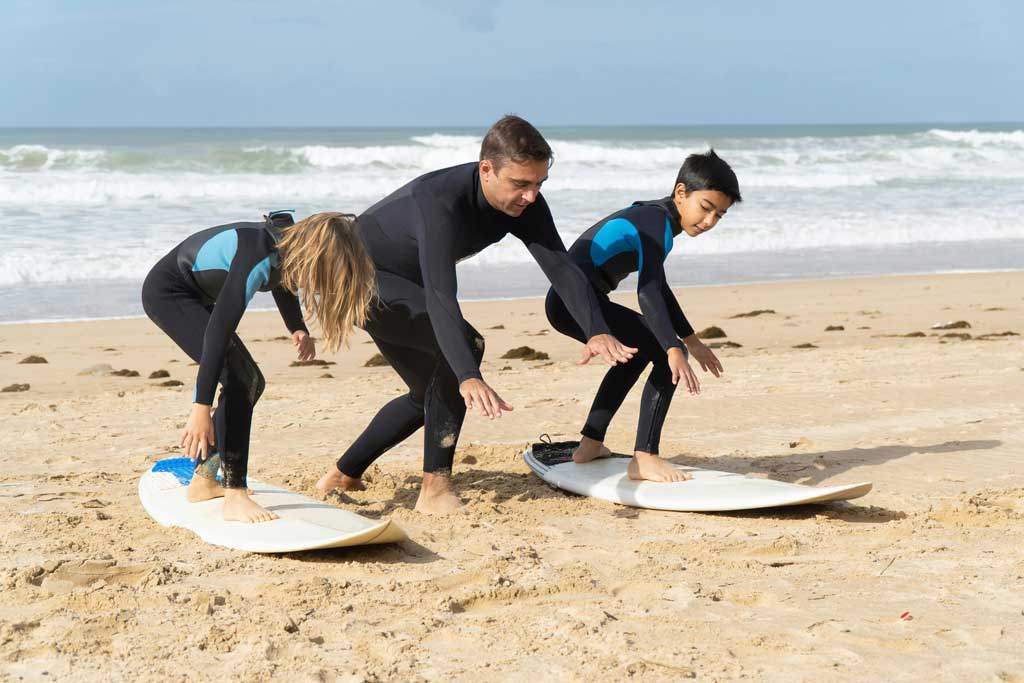
Big surf operators elsewhere often cram twenty students into a single session. Scotland’s independents keep things stripped-back, usually teaching four to six at a time. That means hands-on guidance, faster progress, and far less time waiting your turn.
“When you know everyone’s name, you teach differently,” says Isla Lennox from Moray Wave Academy. “You see real improvement right there in the water – it’s why people come back year after year.”
Local Knowledge Runs Deep
Instructors here grew up reading Scottish tides and winds, not following scripts. They know that what works at Pease Bay won’t work at Durness, and they tailor every lesson to the day’s conditions.
“Up here, we chase the best waves, not the easiest logistics,” says Donald Lawson of Cold Water Surf in Dunbar. “That’s the beauty of being independent – if it looks better on the next beach over, we go.”
Supporting Scotland’s Coastal Communities
Every lesson booked with a small Scottish surf school keeps money circulating locally – employing local instructors, renting from local suppliers, and giving back through beach cleans and youth programs. It’s sustainable surfing in action.
“The sea connects us all,” says Fiona Bruce from Tiree Surf Centre. “When you book local, you’re helping our communities thrive – and you get a real taste of Scottish surf culture.”
Adapting to the Scottish Forecast
The weather in Scotland is unpredictable, but independent schools treat that as an advantage. They can reschedule for perfect swells, suggest early starts for glassier conditions, or swap beaches at short notice. The result is better waves – and better memories.
One visiting couple had their session rescheduled for sunset at Machrihanish. “We surfed glowing waves under a pink sky,” they laughed afterwards. “It felt wild and perfect – like Scotland itself.”
Passion Over Profit
Most of Scotland’s top surf instructors have worked abroad or in Cornwall, yet they’ve chosen to return home and teach their way. Independent teaching means more freedom, creativity, and care – not a cookie-cutter manual written hundreds of miles away.
“I could make more money elsewhere,” admits Callum Reid from Hebridean Surf School. “But I love seeing students fall in love with Scotland’s coastline. That’s worth more than any big-brand job.”
Colder Water, Warmer Welcome
Sure, Scotland’s seas are brisk – but that chill comes with clear waters, empty breaks, and genuine community. Visitors who arrive expecting rough conditions quickly discover the magic that locals have known all along: smaller surf schools and bigger hearts make for the best lessons anywhere in Britain.
“The surf schools in Newquay might have written the playbook,” says Gillies, “but Scotland’s rewriting it – in its own wild, beautiful way.”
Next time you’re tempted to head south for your surf break, think twice. The waves, the people, and the passion are all thriving right here in Scotland – waiting for you to paddle in.
Featured image credit: AI generated.